





No results were found for the filter!


Dieser Schiebeschalter kann einfach in vorhandene Schaltungen die auf Steckboards aufgebaut sind integriert werden.
Article no.: BB-SWITCH-3P




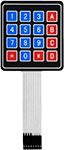
Universal 4x3 Membran Folientastatur mit den Zahlen 0 - 9 und den Zeichen * und #.
Article no.: SM4X3

Universal 4x4 Membran Folientastatur mit den Zahlen 0 - 9 den Zeichen * und # sowie Buchstaben A, B, C, D.
Article no.: SM4X4

Diese auffälligen Arcade Buttons, in coolen Neon Farben, zeichnen sich durch einen kristallklaren, glänzenden Look aus. Die Tastenfunktion ist sanft, ohne starkes Klicken, aber man spürt deutlich, wenn die Taste gedrückt wird.
Article no.: AB30OLT-W

Dieser kapazitive Taster ist ideal für Schaltvorgänge ohne Verschleiß oder mechanische Betätigung. Das Modul wird einfach an eine Versorgungsspannung angeschlossen und gibt bei Annäherung einen High Pegel über den I/O Anschluss aus. Durch die kapazitive Funktionsweise, kann das Modul auch hinter Objekten wie dünnen Glasplatten oder Schranktüren verbaut werden
Article no.: SW223-1


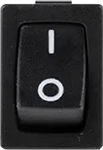
• 2 Stellungen: EIN / AUS
• geeignet für Snap-In Montage
• Einbaumaß: 20mm-Ø
• mit Flachsteckanschlüssen 4,8mm
• Abmessungen LxBxH: 24x24x25mm
• geeignet für Snap-In Montage
• Einbaumaß: 20mm-Ø
• mit Flachsteckanschlüssen 4,8mm
• Abmessungen LxBxH: 24x24x25mm
Article no.: T1323025


Diese auffälligen Arcade Buttons, mit LED Beleuchtung, zeichnen sich durch einen kristallklaren, glänzenden Look aus. Die Tastenfunktion ist sanft, ohne starkes Klicken, aber man spürt deutlich, wenn die Taste gedrückt wird.
Article no.: AB30L5-W

Universal 1x4 Membran Folientastatur mit den Zahlen 1 - 4.
Article no.: SM4T

Diese auffälligen Arcade Buttons zeichnen sich durch einen glänzenden Look aus. Der verbaute High Quality Mikroschalter ist mit dem typischen "Klick" ausgestattet und für bis zu 5 Mio. Nutzungszyklen ausgelegt.
Article no.: AB30OL-W

DIP-Schalter passend auch für Breadboards.
Die Schieberposition dieser DIP-Schalter zur Leiterplattenmontage befindet sich in der AUS-Position.
Die Schieberposition dieser DIP-Schalter zur Leiterplattenmontage befindet sich in der AUS-Position.
Article no.: DIPSW4RT

Diese extra großen und auffälligen Arcade Buttons, mit LED Beleuchtung, zeichnen sich durch einen kristallklaren, glänzenden Look aus. Durch die XXL Größe und die gewölbte Abdeckung, eignen sich die Buttons perfekt als Buzzer. Der verbaute High Quality Mikroschalter ist mit dem typischen "Klick" ausgestattet und für bis zu 5 Mio. Nutzungszyklen ausgelegt.
Article no.: AB100L12-W

Diese besonders kleinen Kurzhubtaster zur SMD Montage mit 4,5 x 4,5mm Gehäuseabmessung finden immer mehr in zahlreichen Geräten Einsatz.
Article no.: KHT44SV4

Universal 1x1 Membran Folientastatur mit einer Taste
Article no.: SM1T

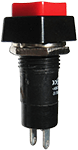
- für Snap-In-Montage
- Einbaumaß: 13x19,2mm
- mit Flachsteckanschlüssen 4,8mm
- Abmessungen LxBxH: 20x15x25mm
- Einbaumaß: 13x19,2mm
- mit Flachsteckanschlüssen 4,8mm
- Abmessungen LxBxH: 20x15x25mm
Article no.: T1323015

Diese großen Arcade Buttons, mit LED Beleuchtung, zeichnen sich durch einen kristallklaren, glänzenden Look aus. Der verbaute High Quality Mikroschalter ist mit dem typischen "Klick" ausgestattet und für bis zu 5 Mio. Nutzungszyklen ausgelegt.
Article no.: DT44L12-W
NEW


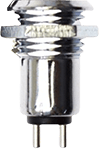
Der KKSB 12mm Druckknopf mit Momentanschalter und 2.54mm DuPont-Anschlüssen bietet einfache Bedienung und Kompatibilität mit verschiedenen KKSB-Gehäusen. Die 150mm langen Kabel in Rot und Schwarz erleichtern die Erkennung. Inklusive M12 Mutter. Ideal für Projekte, die eine zuverlässige Schaltlösung benötigen.
Article no.: 7350001161006

Das KY-021 ist ein Breakout-Board mit Reedschalter-Modul. Der Schalter steht auf On, bis er in Kontakt mit einem Magnetfeld kommt.
- Betriebsspannung: 3,3-5V
- Widerstand: 10kΩ
- Pins: Strom (3,3-5V), Signal, Masse
- Output: Digital
- Betriebsspannung: 3,3-5V
- Widerstand: 10kΩ
- Pins: Strom (3,3-5V), Signal, Masse
- Output: Digital
Article no.: KY-021

2 Achsen Joystick Modul mit analogen Ausgängen und einem Select Taster (Mitteltaster).
Kann zusammen mit einem MCP3008 auch mit dem Raspbery Pi betrieben werden.
Kann zusammen mit einem MCP3008 auch mit dem Raspbery Pi betrieben werden.
Article no.: JYSM-1

• geeignet für Flachkabel
• max. 250 V / 2 A
• weiß
• max. 250 V / 2 A
• weiß
Article no.: T1323006


Diese Tastenkappe kommt in einem Opaque Black, das es Ihnen ermöglicht, Ihren Tasten ein solides professionelles Finish zu verleihen. Sie können diese immer noch mit einem Permanentmarker beschriften oder einen Aufkleber oder ein anderes Markierungsgerät verwenden. Während viele der Cherry MX-Schalter haben einen Platz für eine LED wird es nicht durch diese keycap zeigen.
Article no.: PRT-15305

Mit diesem Schwimmschalter können Sie feststellen ob sich der Pegel in einem Behälter verändert. Das Signal kann an eine Pumpe, einen Melder oder anderen Geräten übermittelt werden. Die Montage erfolgt von der Ober- oder der Unterseite. Die Schalter Einstellung kann durch Umkehrung des Schwimmers als Öffner genutzt werden.
Article no.: WLSW1


Kippschalter Subminiatur, EIN - AUS, 2 Pins, blaues Gehäuse
ideal für den Bereich DIY oder den Modellbau
ideal für den Bereich DIY oder den Modellbau
Article no.: 10013

Kippschalter Miniatur
EIN-AUS-EIN, mit Lötösen
EIN-AUS-EIN, mit Lötösen
Article no.: 10022

Diese Tastenkappe wird in Translucent geliefert, wodurch Sie Ihren Tasten ein solides, professionelles Finish verleihen können. Sie können diese mit einem Permanentmarker beschriften oder einen Aufkleber oder ein anderes Markierungsgerät verwenden. Viele der Cherry MX Schalter haben einen Platz für eine LED, die mit diesen Tastenkappen schön zur Geltung kommt.
Article no.: PRT-15306

Kippschalter Subminiatur
1x UM, 3 Pins, blaues Gehäuse
1x UM, 3 Pins, blaues Gehäuse
Article no.: 10014

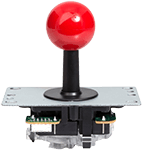
Dieser 8-Wege Joystick ist für Retro oder Arcade Spiele bestens geeignet. Das Design sowie das "Klicken" beim drücken in die gewünschte Richtung lässt an alte Zeiten erinnern. Die 4 verbauten Mikroschalter sind von Hoher Qualität und für bis zu 5 Mio. Schaltzyklen ausgelegt.
Article no.: ARCJS-1

Diese auffälligen Mini Arcade Buttons zeichnen sich durch einen glänzenden Look aus. Der verbaute High Quality Mikroschalter ist mit dem typischen "Klick" ausgestattet und für bis zu 5 Mio. Nutzungszyklen ausgelegt.
Article no.: AB24OL-W


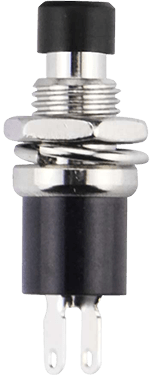
- 1-polig
- Länge 27 mm
- Bohrung Ø 7 mm
- Belastbarkeit 1 A - 125 V / 0,5 A - 250 V
- Länge 27 mm
- Bohrung Ø 7 mm
- Belastbarkeit 1 A - 125 V / 0,5 A - 250 V
Article no.: E-TSS11

Kippschalter Miniatur
EIN-AUS-EIN, mit Lötösen
EIN-AUS-EIN, mit Lötösen
Article no.: 10023

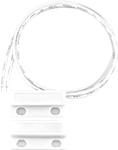
Mit diesem Sensor können Sie überprüfen ob Türen geschlossen oder offen sind.
Eine Klebeschicht befindet sich auf der Rückseite der Sensoren für eine einfache und schnelle Montage.
Eine Klebeschicht befindet sich auf der Rückseite der Sensoren für eine einfache und schnelle Montage.
Article no.: TFK-1

Diese großen und auffälligen Arcade Buttons, mit LED Beleuchtung, zeichnen sich durch einen kristallklaren, glänzenden Look aus. Der verbaute High Quality Mikroschalter ist mit dem typischen "Klick" ausgestattet und für bis zu 5 Mio. Nutzungszyklen ausgelegt.
Article no.: AB60L12-W

Klein-Wippschalter, runde Bauform (Bohrung 20,2 mm) ON-OFF
- 1- polig
- 250 VAC, 6A
- Kontakte versilbert
- Kontaktwiderstand 20 mOhm
- Isolationswiderstand 1000 MOhm
- mit Einrastbefestigung und Verdrehsicherung
- 1- polig
- 250 VAC, 6A
- Kontakte versilbert
- Kontaktwiderstand 20 mOhm
- Isolationswiderstand 1000 MOhm
- mit Einrastbefestigung und Verdrehsicherung
Article no.: E-KWS300
Viewed